Gigaom.com
401 Congress
Suite 1540
Austin, Texas 78701
US
Read the VerticalResponse marketing policy. |  |        
| | This is your last chance to get radically reduced pricing to join us at Gigaom Change. Prices increase July 1st. Register now and secure your place! More than just another event, Gigaom Change is an unprecedented opportunity to directly connect with the brightest and boldest innovators, architects, visionaries & disruptors shaping the technological future of enterprise. Tickets strictly limited to 300+ attendees. Make sure you're one of them! Book
Now What to expect? Over an immersive 2.5 days, we will explore the current state-of-the-art technologies, how these are transforming industry, and why this all matters. You'll emerge with a greater understanding of the exponential technological changes occurring around us, and the confidence to accelerate tangible next steps. Gigaom Change is intentionally designed to empower businesses of today to thrive in a world of tomorrow. Some of the key issues that enterprise business leaders must navigate: - What impact will these emerging technologies have on business?
- Which industries will see the most disruption?
- How can organizations function in a world changing as rapidly as ours?
- Which jobs will be eliminated and which will be created?
- How are society and government likely to change?
- How will we need to navigate the ethical and regulatory landscapes to come?
GE's 2016 Global Innovation Barometer shows that 81% of global executives are mindful of the risk of failing to adapt to technological changes, while other studies believe that as little as 7% are innovation leaders. Byron Reese, Publisher of Gigaom & Author has this to say...
"Topics which were the mainstay of science fiction just decades ago are literally happening right now. The impact of these technologies cannot be overstated. But in today's busy world, it is hard to know more than just a few general concepts. Gigaom Change was created to solve that." We'll be focusing on the seven most disruptive enterprise technologies that are widely known, but little understood. The ideas that don't seem possible, yet somehow are. 
| | Announcing New Gigaom Change 2016 Speakers...  Cofounder & Chief Creative Officer, argodesign | |  IBM Fellow & Director Physical Sciences Department, IBM Research | | 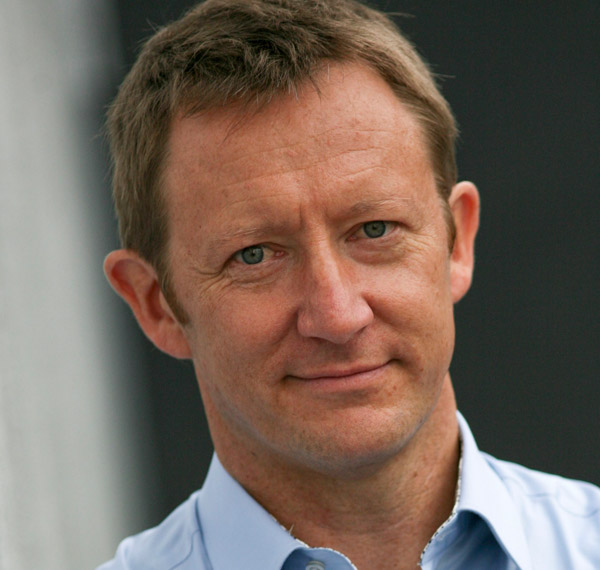 EVP Chief Scientific Officer, Aldebaran | | | | | | | | |
|
Gigaom.com
401 Congress
Suite 1540
Austin, Texas 78701
US
Read the VerticalResponse marketing policy. | | 
 Dr. Jackie Ford Morie is widely known for using technology such as Virtual Reality (VR) to deliver meaningful experiences that enrich people's lives. From 1990 to 1994, Morie worked at the University of Central Florida's Institute for Simulation and Training. While there, she developed multi-sensory techniques for VR that predictably elicit emotional responses from participants. In 1999, she helped establish the USC Institute for Creative Technologies, an Army-funded research lab finding connections between entertainment and military needs and expanding her work in emotionally evocative VR, including patenting a scent collar to deliver evocative odors to participants within immersive experiences. Dr. Jackie Ford Morie is widely known for using technology such as Virtual Reality (VR) to deliver meaningful experiences that enrich people's lives. From 1990 to 1994, Morie worked at the University of Central Florida's Institute for Simulation and Training. While there, she developed multi-sensory techniques for VR that predictably elicit emotional responses from participants. In 1999, she helped establish the USC Institute for Creative Technologies, an Army-funded research lab finding connections between entertainment and military needs and expanding her work in emotionally evocative VR, including patenting a scent collar to deliver evocative odors to participants within immersive experiences.
In 2013 Morie started All These Worlds, LLC to promote virtual environments and technology for healing. Her Coming Home project, started in 2009, created a center in the online world Second Life, where veterans and soldiers in need could find stress relief and rehabilitation activities. She also recently created a virtual world ecosystem called ANSIBLE for NASA designed to provide psychological benefits for future astronauts who will undertake extremely long missions to Mars.
Dr. Morie's other research interests include how space, identity and play in virtual worlds can positively affect our human nature, and she has presented this work at conferences worldwide. Her newest startup, The Augmented Traveler, is focused on bringing an augmented reality product to market that will enhance the way people experience travel to all corners of the world.
Dr. Morie will be speaking on the subject of virtual and augmented reality at Gigaom Change Leaders Summit in Austin, September 21-23rd. In anticipation of that, I caught up with her Tuesday, June 21, with a few questions about virtual reality and it's potential impact on the business world.
Byron Reese: Your involvement with virtual reality goes way back. When do you remember of the first time you thought about it or encountered the term or fiddled with the device? When did what would become VR first popup in your life?
Dr. Jackie Ford Morie: In the late 1980s I became aware of virtual reality and I found a lab in Central Florida that was starting a virtual reality research lab. And so I ended up getting myself hired there so I could work on virtual reality. And that was 1989.
And when you survey, when you flash ahead 27 years to today, how has what happened unfolded in ways that you expected or that you didn't expect?
Well, the thing about actual virtual reality is how amazingly comparable to reality it can be. It doesn't have to be photo-realistic but it gives you a believable experience. And that is really the primary thing behind virtual reality. We're able to give people a very engaging, compelling, believable, cognitively real experience. Even if it's being presented through virtual means.
What's happened now, 27 years later, is that everybody wants to be on the VR bandwagon and things are being called virtual reality that have none of those sort of affordances that virtual reality actually allows us to build on.
So things like 360 video, which is nothing more than wrapping a screen around your head on a sphere. That's not virtual reality, that's another kind of screen that gets wrapped around your head. So I guess the thing that has happened that I could never have anticipated is that many versions of things that are not actually virtual reality are now being called virtual reality and people just keep repeating it because they don't know any better, they have a vested interest in making that be something sexy to the general consumer.
You mention the consumer. Do you see in the next 10 years virtual reality mainly being a consumer technology or do you see virtual reality, and augmented reality, having an impact on the business world?
Oh absolutely, it's going to have an impact on many, many different businesses. The business that wants to get their message out there in a compelling way, there's going to be nothing better than virtual reality or augmented reality to do that, because it's a multi-sensory mechanism for bringing people into the experience you want them to have.
And that's very, very compelling. We go to the theater because it's an experience, but if you want to get that theater experience out to more people and preserve the kind of immersive experience that theater-going gives us, that social aspect, then you're probably going to want to use virtual reality.
Look at Broadway, they're maxed out on tickets, they're maxed out on the prices of these things. How is it going to expand? It's very expensive to send a troop to every city in the country. And yet, the demand is there. But imagine if we were able to create those Broadway shows with virtual reality characters who can either act predictably or have some sort of spontaneous elements to them. And this is going to take more doing in terms of getting believable characters who have some sort of emotion behind them.
Right now, real-estate agents are using it to give you tours of a place. So I'm looking to buy a house in Florida, let's say. I don't have to get on a plane and go to Florida and walk around 15 houses. I can actually take my first pass of those houses through a virtual reality walkthrough and get a sense of what it's like to be in that house.
So here you have those kinds of things. It's certainly what IKEA was doing with augmented reality with their catalogues, where you could take the furniture from the IKEA catalogue and place it in front of you in your room space to see what it looked like. That was a great use of augmented reality and we're going to see a lot more of these things.
So I think what we're going to find is a seamless continuum from reality to mixed reality, augmented reality, that purely virtual thing that can immerse you and separate you from the physical world. And I can think of very few markets that might not have a benefit from this kind of technology.
And to go back to a comment you made earlier about the phrase, "trying to mean everything and therefore meaning nothing," do you consider augmented reality in the camp of really being virtual reality because they are immersive and they respond to your movement and all that, or is even augmented reality not something you would call virtual?
Well, they all use digital technology in some ways. The difference between virtual reality in its purest form and augmented reality in its original context is that pure virtual reality requires you to put on some kind of device, usually a head-mounted display, that separates you from the physical world to immerse you in something where any sort of extraneous signals coming from something that's not the experience being provided to you in virtual reality, they can't intrude.
So it's amusing to go to the meet-ups and conferences right now where somebody puts you in a head-mounted display, mind you designed to separate you from the distractions of the physical world and allow you to focus on that immersive experiences that's been created. And the first thing they do is tap you on the shoulder and say, "hey, you can look around." Or what you're hearing is the glaring sound from the exhibition floor.
Now, augmented reality by context is designed so that it overlays some sort of imagery on to the physical world. So it doesn't work without the physical world. It's augmenting the reality you have. So they're kind of two ends of the spectrum. Maybe you put full physical reality at the very end of the spectrum and the augmented reality is in there. And there are favorites of that where it's more augmented than it is reality or more reality than it is augmented.
So for example, your augmentation might be hold your phone up and it says, there's a great restaurant down this street. And then at the other end you have experiences that require you to separate yourself from the physicality of everyday life. And that's the pure form of virtual reality. So it's a continuum. They're all using virtual technology but in different ways for different purposes.
Do you think there's a chance that a significant portion of the population will put on a virtual reality headset and never take it off?
No. I don't think that's going to happen.
And why do you think that?
Well, I don't think there's enough content in the world for somebody to put one on and never take it off.
But I don't mean, literally never take it off. But the people who already spend enormous amounts of time in virtual worlds, now we've essentially made the virtual world even that much more immersive and believable. So that you have significant number of people that just kind of disappear into those worlds because they consider them more attractive than the real world.
Perhaps there is a subset of a population who was so unsatisfied with their actual lives for whatever reasons. They could be shut ins, or live in a very remote area or whatever. Those people might find a lot of satisfaction being primarily in a virtual space. I think well-rounded individuals will probably balance their time between the physical and the virtual for very good reasons.
You have to be getting something valuable out of immersing yourself in a virtual space and separating yourself from the physical world. I don't see that amount of satisfaction, except for those cases I mentioned, for most of the population any time soon.
Maybe in a 100 years when we really need to go into something that's been created for us because everything else has degraded to the point that we do have an apocalyptic future and we live in a matrix. That type of thing. But I really don't see that happening. I think there's too many things about life itself that can't be delivered through a virtual experience and a head-managed display that is going to forego that kind of situation, where most people want to just live in their virtual space all the time.
And then there's questions like, okay, how did those people even support themselves? And things like that. So, you know, there's just a lot of social and economic barriers to that type of thing happening. I think if people talk about it it's more of a scare thing than a reality that I envision happening any time soon.
Alright. Let's leave it there. It was a great note.
Dr. Jackie Ford Morie will be speaking on the subject of virtual and augmented reality at Gigaom Change Leaders Summit in Austin, September 21-23rd. Now until July 1st, you can register to attend at our Early Adopter pricing of $1150. The full price of an event tickets is $4000, so this is a substantial savings. The event is expected to sell out, so I urge you to sign up today.
I hope to see you in September.
Byron Reese
Publisher, Gigaom | | | |
Gigaom.com
401 Congress
Suite 1540
Austin, Texas 78701
US
Read the VerticalResponse marketing policy. | | 
|