Friday, 8 July 2016

Structure News: Whaddya think it will take to put you in this public cloud today?

This week, we'll talk about how the public cloud market needs to evolve with the times, why container security is so important to its adoption, and what it will take to get to 100 exaflops.pre-header text

STRUCTURE EVENTS Newsletter
 
Where The 2017 Golden State Warriors Look Halfway Decent
July 8th, 2016 / by Tom Krazit
This week, we'll talk about how the public cloud market needs to evolve with the times, why container security is so important to its adoption, and what it will take to get to 100 exaflops.
BIG PICTURE
It’s 2016: do you know where your applications are running?

Fortune took a look this week at a new survey of 100 CIOs conducted by Morgan Stanley in which 53 of those CIOs declared they had no workloads running in the public cloud. The conclusion? Those 53 executives are either kidding themselves about the rogue IT projects in their midst being run in the public cloud or, worse, trying to impose a "no cloud" policy on their organizations that makes their developers roll their eyes every time they charge something on the corporate account to Amazon Web Services.

This is an interesting year for public cloud services providers, as the market continues to mature. Cloud computing is an accepted strategy -- arguably a best practice -- for new businesses unwilling to spend big bucks on servers and older companies looking for a place to host workloads that spike seasonally or randomly. But too many people still see cloud computing as an all-or-nothing choice, both on the buying side and the selling side.

As we get ready for Structure 2016, we’re thinking about the need for greater flexibility when pitching customers that want to employ hybrid cloud strategies for cultural, regulatory, or proprietary reasons. Morgan Stanley predicted those 53 cloud objectors (or deniers) would dwindle to nine within a few years, which makes sense.

Cloud computing is going to be a multi-hundred-billion market by the end of this decade, and cloud companies will turn those 53 holdouts into customers either way. They might do it faster, however, if they start meeting customer demands for flexibility and pricing transparency halfway. And CIOs can help themselves by taking an honest account of where their workloads are best positioned; an amnesty policy for rogue IT projects that obviously are better off in the cloud, maybe?
STRUCTURE NEWS
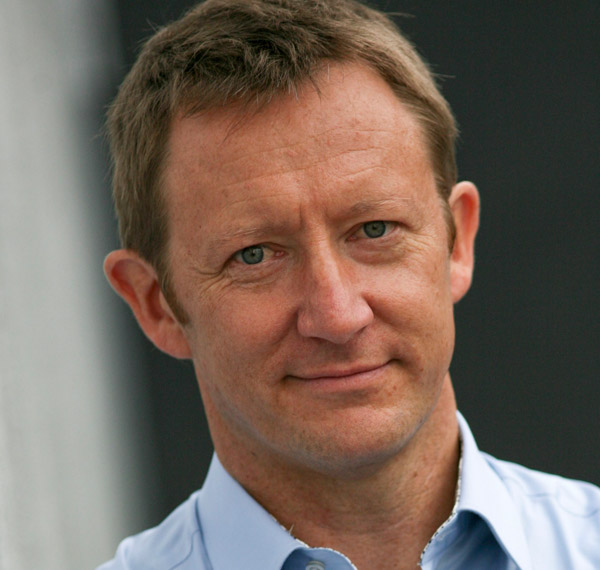
Last year CoreOS founder and CEO Alex Polvi (pictured) joined us at Structure 2015 to talk about containers, Kubernetes, and managing next-generation software projects. We’re thrilled to announce that he’ll be joining us at Structure Security this September in San Francisco to talk about container security, one of the hottest topics circling around the container revolution. We’re still finalizing the details for Polvi’s session, so stay tuned, but in the meantime you can find more information about the Structure Security lineup (which has not been finalized!) right here.
INDUSTRY NEWS
AVAST TO BUY AVG FOR $1.3 BILLION TO ADD SECURITY SOFTWARE
Two security companies born in the Czech Republic are back together with Avast’s $1.3 billion purchase of AVG. Bloomberg reports that Avast is interested in using AVG’s technology to shore up its products for securing the internet of things, one of the most-referenced topics we’ve heard from people interested in participating in Structure Security.

GOOGLE’S DEEP MIND TO USE 1 MILLION NHS EYE SCANS TO SPOT DISEASES EARLIER

Sure, Go was an entertaining challenge, but Google’s DeepMind unit has signed up for something far more significant with plans to analyze health records for signs of eye disease. Ars Technica says the five-year research project involving eye scans conducted by a U.K. hospital will apply machine learning techniques in hopes of detecting diseases that cause vision loss before the damage is done.

HOW AWS CAME TO BE

Techcrunch has a nice roundup of AWS CEO Andy Jassy’s recent appearance in Washington, DC, where he went into some detail recounting the origin story of Amazon Web Services. Some of this has been covered before, but it’s worth reading to understand why it takes some companies a long time to realize they’ve hit upon something transformational, and why some companies never translate that realization into a business.

INSIDE GOOGLE AND MICROSOFT’S RACE TO CATCH AMAZON IN THE CLOUD

Speaking of AWS, its foresight has allowed it to dominate cloud computing to a huge degree, even ten years after it first launched. Forbes has another one of those can-Google-catch-AWS? profiles that have been making the rounds since Diane Greene took day-to-day control of Google’s cloud strategy, but give it a click for the anecdotes and focus on the Big Three.

KUBERNETES 1.3 STEPS UP FOR HYBRID CLOUDS

Google rolled out a new version of Kubernetes this week that Light Reading believes will make it easier for users to deploy containers across a variety of clouds. The container-management battles of the next couple of years should be very interesting as Docker rolls out its own container management product and more and more companies embrace the lightweight software development strategy.

DREAMING OF 100 EXAFLOPS IN 2030

The Next Platform has another dispatch from this year’s International Supercomputing Conference in Germany, and this one focused on the scaling challenges that will face the enterprise computing industry as it continues to grow. Intel’s Al Gara focused on how memory and interconnects will have to bear as much of this load as the CPU, and how some fundamental engineering will have to take place to make these breakthroughs.
 
QUOTE OF THE WEEK
Lock-in is a question we get a lot, and it’s very understandable. We feel like we need to earn your business every hour, every month, every year.”


STRUCTURE

Click here to unsubscribe from this list.

Our mailing address is:
Structure
405 El Camino Real, #215
Menlo Park, CA 94025

Add us to your address book


Copyright (C) 2016 Structure All rights reserved.

Forward this email to a friend.

Update your profile.

Wednesday, 6 July 2016

Will the robots take all the jobs?

Gigaom Change

Will the robots take all the jobs?

This article is part of a continuing series leading up to Gigaom Change, which will be held in September in Austin, Texas.

Humans have always had a love/hate relationship with labor saving devices. Generally speaking, the owner of the device loves it and the person put out of work by it hates it. This tension periodically takes the form of violent rejection of industrial technology in all of its forms.

The cotton gin "did the work of twenty men" which meant that after it was installed, one fella loved it, but the nineteen newly-unemployed workers probably shook their fists at the infernal gin, wishing all manner of evil to befall that Eli Whitney troublemaker.

While this "technological unemployment" has been cited as the cause of our economic woes for two centuries, the issue has taken on a new since of urgency as their has emerged a general fear that the wave of technical innovation we are currently in will capsize the economy and produce a new category of workers: The permanently unemployed.

Is this another example of the "boy who cried 'no jobs'?" or are we witnessing a true transformation in our economic world?

The question is fundamentally unknowable because it hinges on three independent factors, each of which is also unknowable.

The three factors are:

  1. How many jobs will the robots/AI really take?
  2. How quickly will that happen?
  3. What new jobs will be created along the way?

Let's dive in:

The tipping point of widespread permanent unemployment is thought by many to be the driverless car taking all the jobs away from the truck drivers:

Self-Driving Trucks Are Going to Hit Us Like a Human-Driven Truck

One Oxford study claims that 47% of US jobs could vanish in 20 years. While consulting giant McKinsey & Company says 45% of all work activities could be automated right now.

But at the same time, there is a chorus of voices urging calm and pointing out that in spite of radical transformations of virtually every industry, the US has maintained near-full employment. How can this be?

Continue Reading

Robotics, and its impact on business, will be one of seven topic areas covered at the Gigaom Change Leader's Summit in September in Austin. Join us.

Full Schedule: https://gigaom.com/change/schedule/
Copyright © 2016 Knowingly, Inc., All rights reserved.


Click to view this email in a browser

If you no longer wish to receive these emails, please reply to this message with "Unsubscribe" in the subject line or simply click on the following link: Unsubscribe

Gigaom.com
401 Congress
Suite 1540
Austin, Texas 78701
US

Read the VerticalResponse marketing policy.

Try Email Marketing with VerticalResponse!

Friday, 1 July 2016

Structure News: Are you prepared to pay a ransom for your data?

This week, we'll talk about the race to find a solution to ransomware.

STRUCTURE EVENTS Newsletter
 
Where Every Day Is Independence Day
July 1st, 2016 / by Tom Krazit
This week, we'll talk about the race to find a solution to ransomware, the search for what lies behind Moore's Law, and the need for standards in hardware security.
BIG PICTURE
Ransomware is scary. Unlike other information security threats, ransomware is deeply personal, threatening not just the loss of important data but embarrassment and sometimes genuine fear that data will become public. Small wonder then that these attacks are becoming more commonplace and more brazen; as Ars Technica noted in two posts this week, one scammer made $45,000 in just three weeks, and another is actually taunting victims while providing detailed instructions -- customer service, really -- on how to turn money into bitcoin.

While this has been a problem for a while, ransomware could explode as the more sophisticated scammers find ways to target larger companies and demand more money for the safe return of critical data. Just this week, Circle Sport-Levine Family Racing, which competes on the NASCAR circuit, revealed that it had been successfully attacked with ransomware that the organization wound up solving by simply paying the attacker who encrypted their data. It’s easy to understand why they paid: time was an issue as an important race drew near, the value of the data was estimated at $2 million, and the attacker only asked for 500 bucks. The team even got a new sponsor out of it: Malwarebytes, which helped the team in the aftermath.

It’s likely the racing team would have paid far more to ensure it could compete on the NASCAR circuit, which is a billion-dollar business. So what happens when attackers start targeting lucrative but under-the-radar businesses, like medium-size banks and financial institutions that often lack the expertise and resources to defend themselves as well as multinational corporations? Many will likely pay to keep the breaches secret (which countless companies probably have already done), arming the better attackers with more resources to improve their techniques.

This is one of those reminders that it’s high time to increase the amount of information shared between companies who have been affected by this growing threat, which Circle Sport-Levine Family Racing chose to do with its NASCAR counterparts. Those behind ransomware are counting on shame to prevent their victims from pooling enough information with law enforcement to figure out who is behind these attacks, and right now, they’re winning.
STRUCTURE NEWS
SETTLING ON STANDARDS FOR HARDWARE SECURITY AT STRUCTURE SECURITY
We’ve added some great speakers in the past week for Structure Security, scheduled for September 27th and 28th at the Golden Gate Club in San Francisco. One session I’m particularly excited about is our hardware security panel, which will feature Marc Canel of ARM (pictured), Alex Gantman of Qualcomm, and Steve Grobman of Intel. We’ll be talking about the need for common ground when it comes to labeling hardware security features, hopefully kicking off a push for standardization around those terms. Register for Structure Security here, and more information can be found here.
INDUSTRY NEWS
ALCHEMY CAN’T SAVE MOORE’S LAW
Last week I highlighted some of The Next Platform’s coverage of the International Supercomputing Conference, but this later caught my eye: an Intel engineer frankly discussing the coming end of Moore’s Law in public, which would have put you on double-secret probation back in the day. This recap of Joshua Fryman’s talk in Germany is worth your time if you’ve been wondering where the next chapter in high-performance chip-making will take us.

AMAZON’S FIRST INDIAN AWS DATA CENTERS LAUNCH IN MUMBAI

The thousands of Amazon Web Services customers in India will now have access to a data center within the borders of the country. Venturebeat reports that the new data centers should help improve performance and satisfy local laws about data storage.

CLEVER ATTACK USES THE SOUND OF A COMPUTER’S FAN TO STEAL DATA

This is kind of amazing: Security researchers at Ben-Gurion University have figured out how to use the sound of cooling fans on machines disconnected from the internet in order to steal small amounts of data. There are a few hoops to jump through, as Wired details, but it seems like a feasible technique in the hands of extremely sophisticated hackers.

HIGH-SEVERITY BUGS IN 25 SYMANTEC-NORTON PRODUCTS IMPERIL MILLIONS

If you were affected by this vulnerability, you probably updated your systems already, but worth noting that Symantec disclosed flaws in 25 security products this week. Ars Technica notes that it’s another reminder that security products can themselves cause security problems, and this one is particularly scary because it doesn’t require a user to click on something in order to activate the worm.

TESLA DRIVER KILLED IN CRASH WITH AUTOPILOT ACTIVE, NHTSA INVESTIGATING

While it might not be as dangerous as trying to drive on 101 in Silicon Valley, the road to fully autonomous cars is still going to be dangerous. The Verge reports on the news that Tesla’s Autopilot feature failed to prevent the crash of a Tesla Model S into a tractor-trailer that it apparently didn’t notice crossing a highway, killing the driver.

DO THIRD-PARTY VENDORS HAVE A BULLSEYE ON THEIR BACKS?

Outsourcing non-core business functions, especially in the cloud software era, is standard-operating procedure for an awful lot of companies. But each provider you bring into your organization can create security issues that you’ll have to deal with, according to CSO, and many companies don’t pursue security service-level agreements with as much zeal as they do uptime agreements.
QUOTE OF THE WEEK
The next entrepreneur who’s 22 years old, graduating from a technical university in Germany may, instead of moving to London to do their Fintech startup, decide to go to Berlin instead.”


STRUCTURE

Click here to unsubscribe from this list.

Our mailing address is:
Structure
405 El Camino Real, #215
Menlo Park, CA 94025

Add us to your address book


Copyright (C) 2016 Structure All rights reserved.

Forward this email to a friend.

Update your profile.

Last Chance - Event Prices Go Up Tomorrow!

Gigaom Change

This is your last chance to secure your place among 300+ visionary leaders tasked with guiding their organizations into the future, at the Early Bird discounted price.

 
Book
Now
 

DISRUPTIVE INNOVATION IS HERE.
IT'S HAPPENING NOW.


Gigaom Change is a landmark event that will provide an opportunity for forward-thinking business leaders to explore the most disruptive enterprise technologies shaping the new normal. What's happening today, what's coming next, and as we look to the future what you need to know to begin confidently applying these technologies.


Key Enterprise Technologies


Already committed to joining us are top level execs from companies like Dell, Deloitte, CognitiveScale, Disney, Intel, Nokia, Verizon, Warner Bros., and many many more. Don't miss out. This is an incredible chance to network directly with a small and very select group of visionaries who are building the future forward.


Time is Running Out on Early Bird Pricing!

motionmailapp.com


Along with this select group of attendees will be 20+ truly innovative speakers who are at the forefront of the biggest technological advances set to change everything. We're excited to connect you to the vast expertise of this cutting-edge group of passionate minds who will help bridge the gap between today's business operations and tomorrow's demanding expectations.

Full Schedule: https://gigaom.com/change/schedule/


Click to view this email in a browser

If you no longer wish to receive these emails, please reply to this message with "Unsubscribe" in the subject line or simply click on the following link: Unsubscribe

Gigaom.com
401 Congress
Suite 1540
Austin, Texas 78701
US

Read the VerticalResponse marketing policy.

Try Email Marketing with VerticalResponse!

Thursday, 30 June 2016

Tickets Go Up July 1st! Also, Check Out Our New Speakers

Gigaom Change is designed to empower businesses of today to thrive in a world of tomorrow.
Is this email not displaying correctly?
View it in your browser.
Gigaom Change

This is your last chance to get radically reduced pricing to join us at Gigaom Change. Prices increase July 1st. Register now and secure your place!

More than just another event, Gigaom Change is an unprecedented opportunity to directly connect with the brightest and boldest innovators, architects, visionaries & disruptors shaping the technological future of enterprise. Tickets strictly limited to 300+ attendees. Make sure you're one of them!

Book
Now
 

What to expect?

Over an immersive 2.5 days, we will explore the current state-of-the-art technologies, how these are transforming industry, and why this all matters. You'll emerge with a greater understanding of the exponential technological changes occurring around us, and the confidence to accelerate tangible next steps.


Gigaom Change is intentionally designed to empower businesses of today to thrive in a world of tomorrow.


Some of the key issues that enterprise business leaders must navigate:

  • What impact will these emerging technologies have on business?
  • Which industries will see the most disruption?
  • How can organizations function in a world changing as rapidly as ours?
  • Which jobs will be eliminated and which will be created?
  • How are society and government likely to change?
  • How will we need to navigate the ethical and regulatory landscapes to come?

 
GE's 2016 Global Innovation Barometer shows that 81% of global executives are mindful of the risk of failing to adapt to technological changes, while other studies believe that as little as 7% are innovation leaders.
 

Byron Reese, Publisher of Gigaom & Author has this to say...
"Topics which were the mainstay of science fiction just decades ago are literally happening right now. The impact of these technologies cannot be overstated. But in today's busy world, it is hard to know more than just a few general concepts. Gigaom Change was created to solve that."


We'll be focusing on the seven most disruptive enterprise technologies that are widely known, but little understood. The ideas that don't seem possible, yet somehow are.


Seven Key Technologies

Announcing New Gigaom Change 2016 Speakers...

Mark Rolston

Mark Rolston

Cofounder & Chief Creative Officer, argodesign

Dr. Heike Riel

Dr. Heike Riel

IBM Fellow & Director Physical Sciences Department, IBM Research

Rodolphe Gelin

Rodolphe Gelin

EVP Chief Scientific Officer, Aldebaran

Full Schedule: https://gigaom.com/change/schedule/
Copyright © *|CURRENT_YEAR|* Knowingly, Inc., All rights reserved.


Click to view this email in a browser

If you no longer wish to receive these emails, please reply to this message with "Unsubscribe" in the subject line or simply click on the following link: Unsubscribe

Gigaom.com
401 Congress
Suite 1540
Austin, Texas 78701
US

Read the VerticalResponse marketing policy.

Try Email Marketing with VerticalResponse!